"I'll quit after the surgery" is what most smokers tell us. The truth is, quitting even briefly before surgery is when it matters most.
How Smoking Affects Surgery and Healing
- Slower wound healing — reduced oxygen delivery to tissue impairs the body's ability to repair itself
- Higher infection risk — smoking weakens the immune response at the wound site
- More breathing problems — under anaesthesia and during recovery, smokers face a higher risk of coughing, breathing difficulty and lung complications
What Happens When You Stop, Even Briefly
- Better oxygen levels — carbon monoxide from cigarettes clears from the blood within hours of stopping, improving oxygen delivery almost immediately
- Faster wound healing — tissue oxygenation improves the longer you stay smoke-free
- Fewer complications — the risk of breathing and healing problems drops measurably with even a short smoke-free period before surgery
Two weeks smoke-free before surgery produces a real, measurable improvement in outcomes. Longer is better still, but even a short break is far better than none.
What About the Day of Surgery Itself?
Do not smoke on the morning of surgery under any circumstance — this affects both anaesthesia safety and immediate breathing function during the procedure. If you smoke right up until admission, tell your anaesthesia team honestly; this information changes how your airway and breathing are managed.
It's Never "Too Late" to Stop Before Surgery
Even if your surgery is only days away, stopping now still helps. There is no point at which quitting before surgery becomes pointless — every smoke-free day between now and your operation adds up.
If you've been looking for a reason to quit, or even just to pause, a scheduled surgery is one of the strongest medical reasons there is.
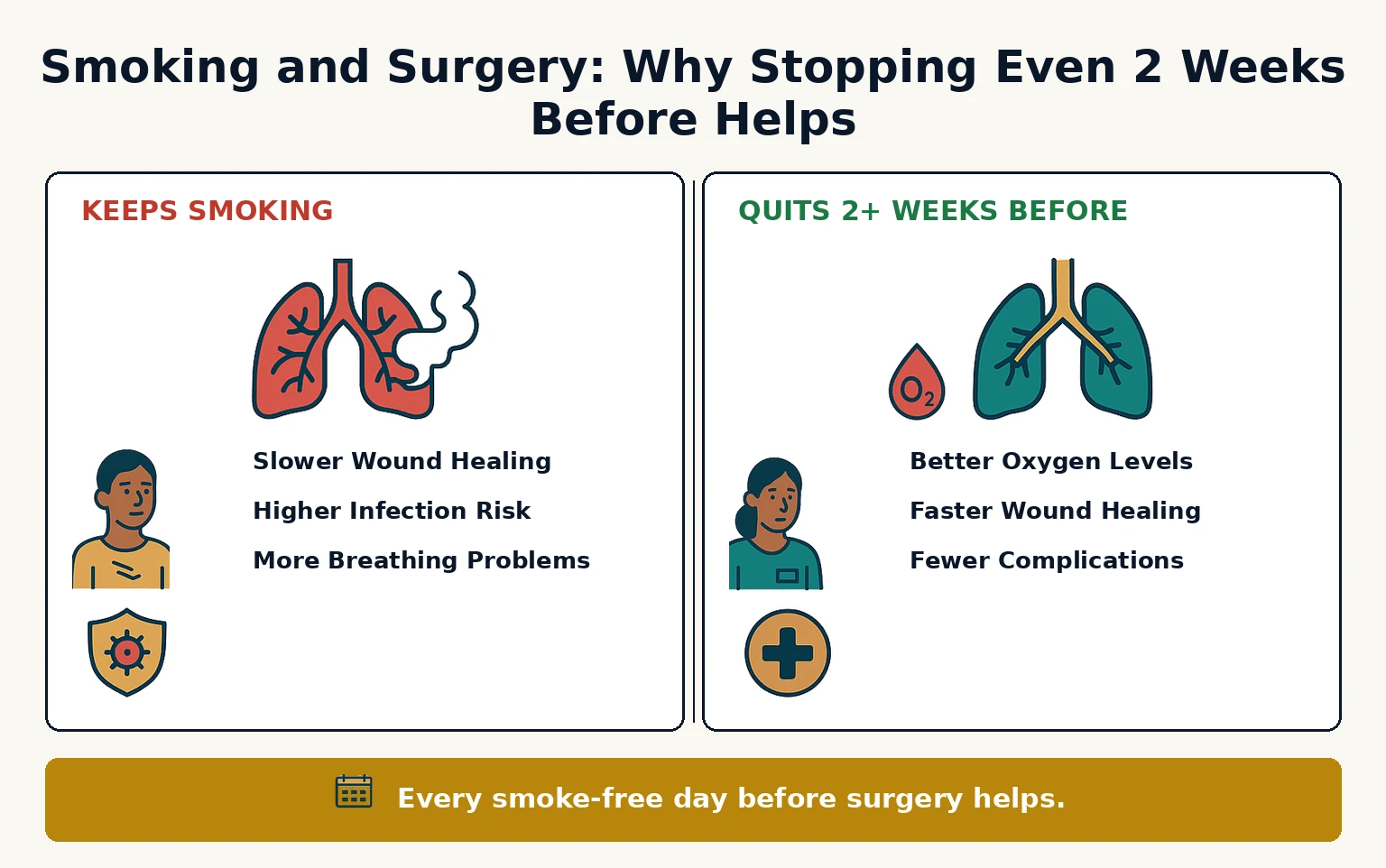
Smoking and surgery comparison infographic
Have Surgery Coming Up?
Talk to our anaesthesia team at Sri Ganga Hospital about how smoking may affect your specific procedure and anaesthesia plan.
📅 Book a Consultation 💬 WhatsApp Us