"Doctor, will I need surgery for my kidney stone?" — the honest answer almost always depends on one thing: size.
How Stone Size Guides Treatment
- Under 4mm: These usually pass on their own with good hydration, sometimes helped by medication that relaxes the ureter.
- 4–8mm: Some pass with medication and monitoring; others need an intervention, depending on position and whether they are moving or causing a blockage.
- Over 8mm: These usually need an active procedure — passing on their own is uncommon at this size.
Size alone is not the whole story — location, whether the stone is blocking urine flow, and whether infection is present all factor into the decision, which is why the same size stone can be managed differently in two different patients.
Symptoms That Suggest a Kidney Stone
- Sudden, severe pain in the flank or lower back, often coming in waves
- Pain that may radiate toward the lower abdomen or groin
- Blood in the urine
- Nausea or vomiting alongside the pain
- Burning sensation while urinating
Severe flank pain with fever, or blood in the urine, needs prompt medical evaluation. Fever alongside a kidney stone can mean infection behind a blockage — a genuine emergency, not something to wait out at home.
Non-Surgical Management
For smaller stones, treatment typically involves drinking plenty of water, pain relief, and sometimes medication to help the stone pass more easily. You may be asked to strain your urine to catch the stone for lab analysis, which helps guide prevention advice afterwards.
When a Procedure Is Needed
For larger stones, or ones causing a persistent blockage or infection, several procedures are available, chosen based on the stone's size and location:
- Shockwave lithotripsy: Sound waves break the stone into smaller fragments that pass naturally
- Ureteroscopy: A thin scope removes or fragments the stone directly, without external incisions
- Percutaneous procedures: Used for larger or more complex stones, via a small access point
Most of these are done as day-care or short-stay procedures with a relatively quick return to normal activity.
Preventing the Next One
Once you have had one kidney stone, you are at higher risk of another. Staying well hydrated, moderating salt intake, and following any specific dietary advice based on your stone's composition all reduce that risk meaningfully.
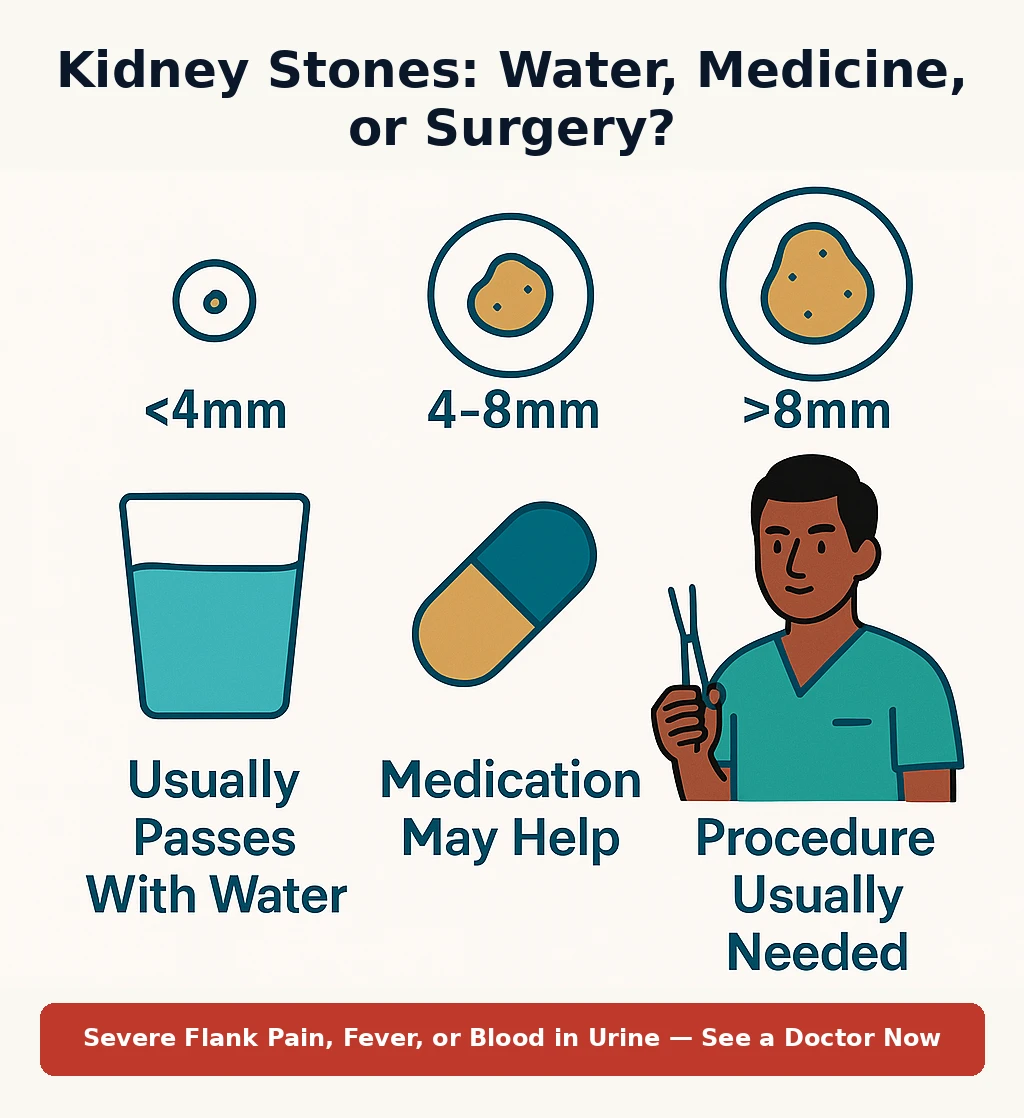
Kidney stones treatment by size infographic
Sudden Flank Pain or Blood in Your Urine?
Our team at Sri Ganga Hospital can evaluate your kidney stone and recommend the right treatment based on its size and position.
📅 Book a Consultation 💬 WhatsApp Us