"It's just one biscuit, does it really matter?" — this is one of the most dangerous questions we hear before surgery.
Fasting instructions before surgery can feel like an inconvenience, especially when you are already anxious and hungry. But this is not a formality. It is one of the most important safety rules in the entire surgical process.
Why Fasting Actually Matters
Normally, reflexes in your throat stop food or liquid from entering your windpipe and lungs. Under anaesthesia, those protective reflexes are switched off. If your stomach still contains food or liquid, its contents can travel backward into the throat and down into the lungs — a serious complication called aspiration, which can cause severe pneumonia or lung injury.
An empty stomach is the single most effective way to prevent this. It is not about comfort — it is about keeping your airway safe while you cannot protect it yourself.
The Usual Timeline
Exact timings can vary slightly based on your surgery and anaesthesiologist's instructions, but a typical fasting schedule looks like this:
- 8 hours before: no solid food, including heavy or fatty meals
- 6 hours before: no milk, formula, or milky drinks
- 2 hours before: no clear liquids, including water
Follow the exact instructions your surgical team gives you — these can differ slightly for children, pregnant patients, and certain medical conditions.
What If You Accidentally Eat or Drink Something?
Tell your team immediately. Do not hide it out of embarrassment or fear that surgery will be cancelled. Surgery can usually be rescheduled by a few hours or a day if fasting has been broken — but proceeding with a full stomach risks a genuinely dangerous complication. Honesty here protects you.
What About My Regular Medicines?
Fasting from food and drink does not automatically mean stopping all medicines. Some medicines — particularly for blood pressure or heart conditions — are often taken with a small sip of water even on the morning of surgery, while others need to be paused. This decision is made specifically for you at your pre-anaesthesia checkup, so never stop or continue a medicine on your own assumption.
Special Situations
- Children: Fasting times are shorter and more precisely timed, since children tolerate prolonged fasting poorly. Follow the paediatric anaesthesia team's specific instructions.
- Diabetes: Fasting affects blood sugar control, so your medicine or insulin timing will usually be adjusted around the fasting period.
- Emergency surgery: When there is no time to fast, the anaesthesia team uses alternative techniques to protect the airway safely.
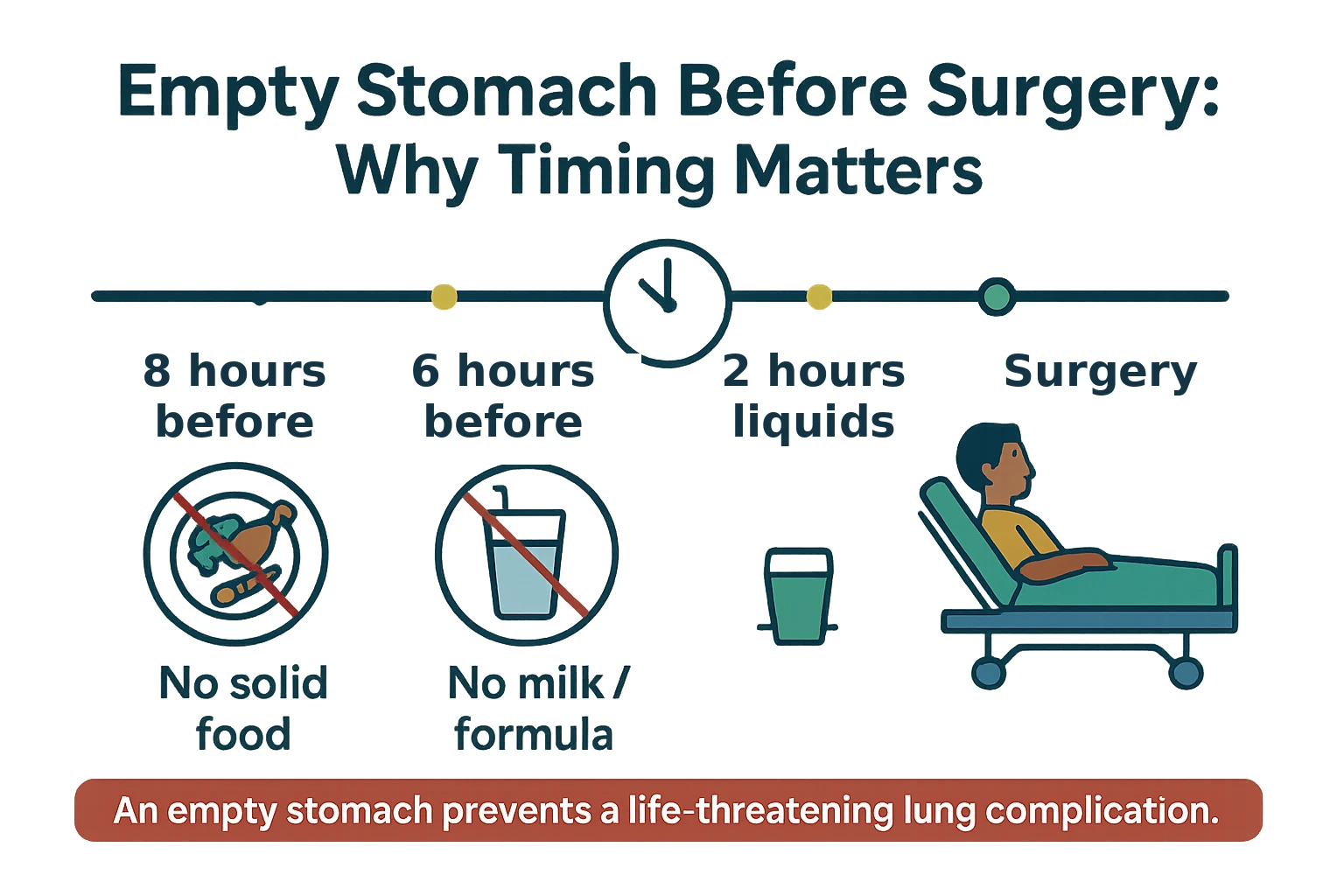
Fasting before surgery timeline infographic
Questions About Your Fasting Instructions?
Our anaesthesia team at Sri Ganga Hospital will give you exact fasting timings for your specific surgery and medicines.
📅 Book a Consultation 💬 WhatsApp Us