Once surgery is scheduled, most of a parent's anxiety comes from the unknowns — what to expect, what to bring, and how to help your child through it. This is a practical checklist for the days before and the day of your child's procedure.
Before the Day: What to Expect
Your child will usually have a pre-anaesthesia check beforehand, where the anaesthesia team reviews their health history, any allergies, previous anaesthesia experiences, and current medicines or supplements. This is also the right time to ask any question you're carrying about the anaesthesia itself.
Fasting Rules for Children
Children have their own, more precisely timed fasting rules than adults, because prolonged fasting is tolerated poorly at younger ages. Your pediatric anaesthesia team will give you exact timings by your child's age and the time of surgery — typically stopping solid food and milk some hours before, with clear (non-milky) fluids allowed until closer to the procedure. Follow the exact timing given, not general adult guidance, and tell the team immediately if your child accidentally eats or drinks outside the window.
For a deeper look at how pediatric anaesthesia dosing, monitoring, and staying with your child work, see our full guide: Anaesthesia in Children — A Parent's Guide.
What to Bring
- All previous medical reports, prescriptions, and the pre-anaesthesia checkup paperwork
- ID and insurance documents if applicable
- A favourite comfort toy or blanket, if the hospital allows it
- Loose, comfortable clothing for your child
- A charged phone and snacks/water for yourself — admission days involve waiting
Preparing Your Child Emotionally
Use simple, honest, age-appropriate language rather than avoiding the topic altogether — children generally cope better with some preparation than with a surprise. Avoid frightening phrasing, and stay calm yourself, since children pick up on parental anxiety quickly.
Staying With Your Child
In most cases, a parent can stay with the child right up until they are asleep, which meaningfully reduces anxiety in the lead-up to anaesthesia. Confirm this directly with your child's anaesthesia team beforehand, as exact hospital policy can vary by procedure.
After Surgery
Children often wake from anaesthesia more disoriented or upset than adults — sometimes with brief crying or confusion — which is common and usually settles quickly. You will typically be brought to your child as soon as they are stable in the recovery area, and the team will walk you through pain relief, feeding, and wound care instructions before you go home.
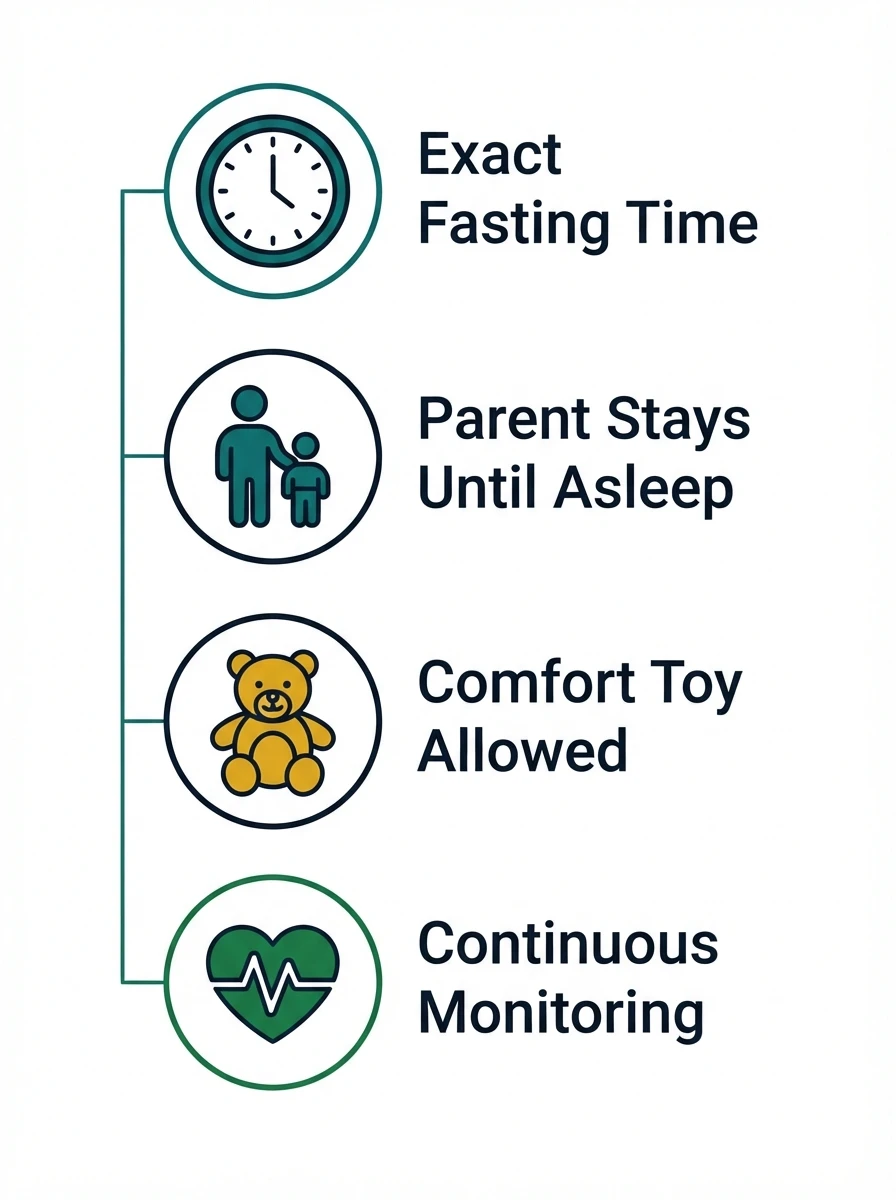
A practical checklist for the day of your child's surgery.
Your Child Has Surgery Scheduled?
Our pediatric surgery and anaesthesia team at Sri Ganga Hospital will walk you through exactly what to expect, in plain, reassuring terms.
📅 Book a Consultation 💬 WhatsApp Us