Appendicitis is the most common reason for emergency abdominal surgery in children — but it is also one of the more frequently missed diagnoses in young children, precisely because it doesn't always look the way parents (or sometimes even doctors) expect.
Why Appendicitis Looks Different in Children
The classic adult description — pain starting near the navel, then moving and settling in the lower right abdomen — is often less clear-cut in children, especially younger ones. Younger children in particular may not be able to describe or localise their pain accurately, and the whole picture can look more like a viral stomach bug at first.
Symptoms by Age Group
- Toddlers and preschoolers: often present with vague, generalised abdominal pain, reduced activity, refusal to eat, fever, and vomiting — sometimes with no clear localising pain at all
- School-age children: more often describe pain starting around the navel and moving to the lower right, closer to the adult pattern, along with loss of appetite, low fever, and nausea
- Teenagers: presentation is closest to adults, though it can still be atypical
Why Diagnosis Is Sometimes Delayed
Because early symptoms can resemble gastroenteritis, constipation, or a general viral illness, appendicitis in young children is sometimes not suspected on the first assessment. This is one reason perforation (rupture) rates are higher in younger children — the appendix has had more time to become severely inflamed before the diagnosis is made.
A child with abdominal pain that is persistent, worsening, or accompanied by fever, vomiting, or reluctance to walk or jump (which worsens the pain) should be examined by a doctor rather than watched at home for more than a few hours.
Diagnosis and Treatment
Diagnosis combines clinical examination, blood tests, and usually an ultrasound (avoiding unnecessary radiation in children where possible). Treatment for confirmed appendicitis is surgical removal of the appendix (appendectomy), most often done laparoscopically through small incisions, which generally means less pain and a faster return to normal activity than open surgery.
What to Watch For at Home
- Pain that is getting worse rather than settling over several hours
- Fever combined with abdominal pain
- A child who is reluctant to walk, jump, or have their tummy touched
- Vomiting that continues alongside the pain
When in doubt, it is always safer to have your child examined than to wait and watch — early evaluation is exactly what prevents the complications of a missed or delayed diagnosis.
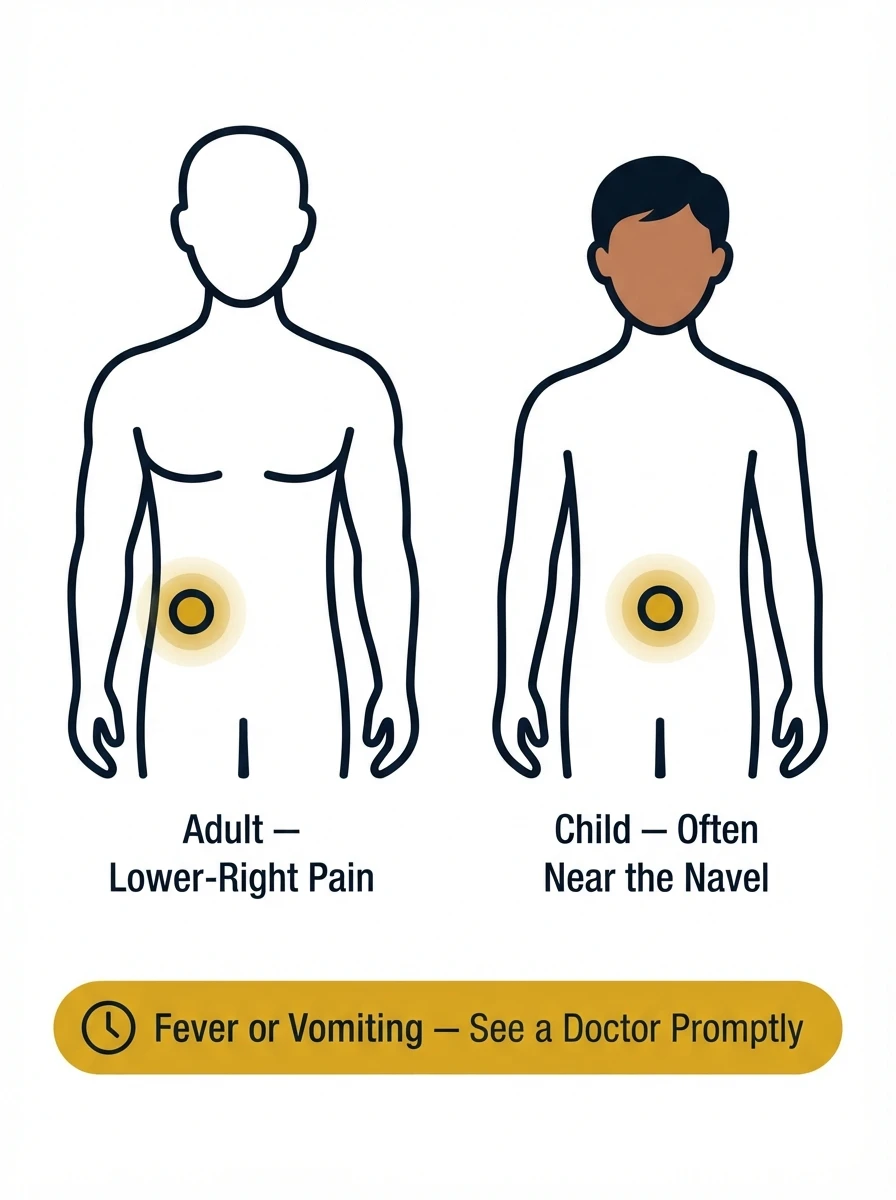
Why appendicitis often presents differently — and is harder to catch early — in children.
Child With Persistent Stomach Pain?
Dr. Venkatesh Kolla and the emergency team at Sri Ganga Hospital can assess your child promptly, any time, day or night.
📅 Book a Consultation 💬 WhatsApp Us