Cool a burn under clean running water for at least 20 minutes, cover it loosely with a clean cloth, and get medical attention for anything beyond a small, minor burn. Never use toothpaste, ghee, butter, ice, or any home remedy — these all make burns worse.
Burns are one of the most common household injuries — and also one of the most mistreated, because of remedies passed down as "what always works." Most of them don't. Here's what actually helps, and why the popular fixes can make things worse.
What this guide covers
The Correct First Response
✅ Do this
- Cool the burn under clean, cool (not icy) running water for at least 20 minutes. This is the single most effective thing you can do.
- Remove tight clothing, rings, or jewellery near the burn area before swelling starts — but never pull off clothing that's stuck to the skin.
- Cover loosely with a clean, non-fluffy cloth or cling film — this protects the area without sticking to it.
- Keep the person warm elsewhere on the body while cooling the burn, to avoid them getting too cold.
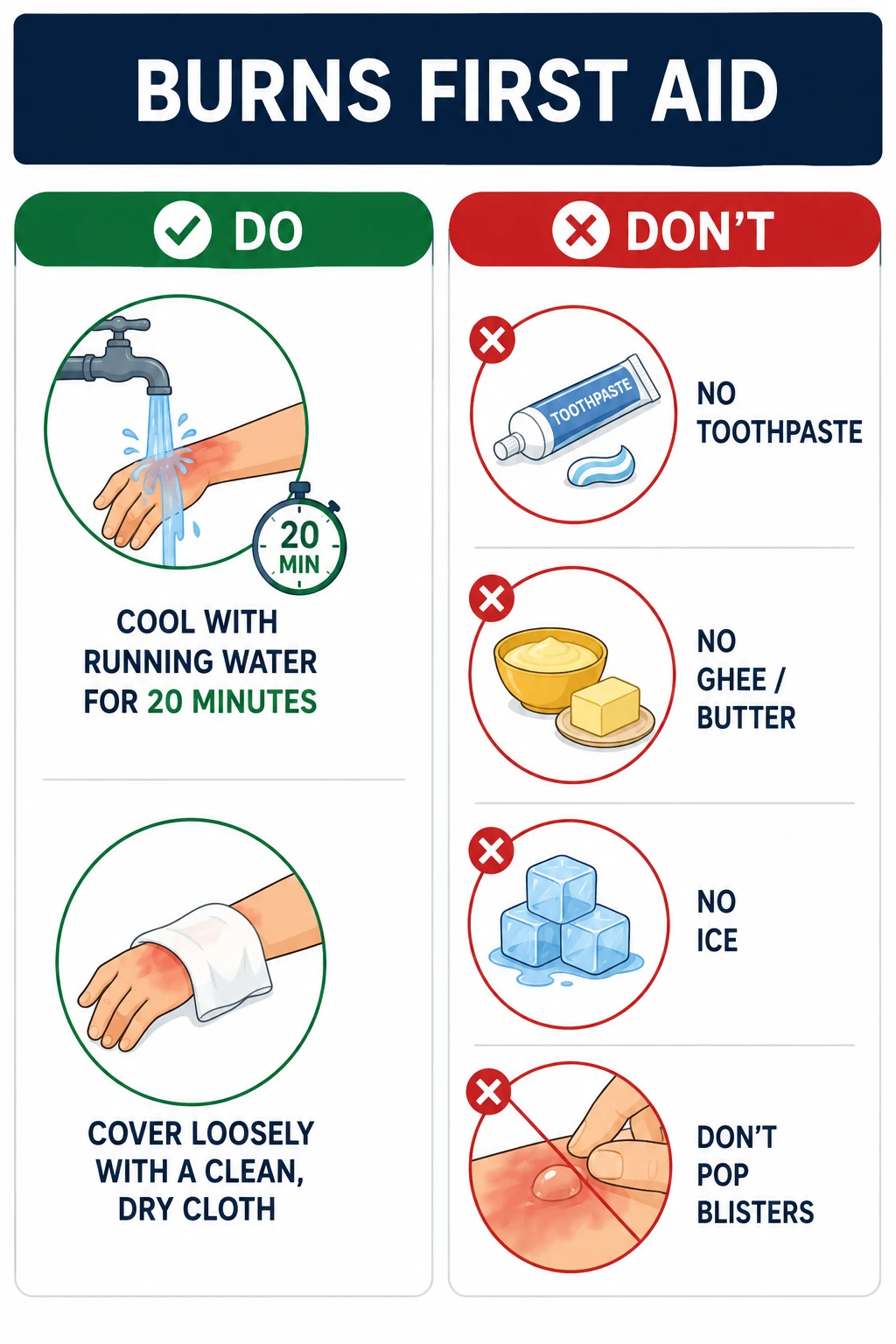
Figure 1: The correct first response to a burn — and the common myths to avoid.
Why Toothpaste, Ghee, and Ice Make It Worse
🚫 Common remedies that actually harm
- Toothpaste traps heat inside the skin instead of releasing it, and its ingredients can irritate the wound and introduce infection.
- Ghee or butter coats the burn in oil, sealing in heat and making it harder for doctors to assess the depth of the injury later.
- Ice or ice-cold water can restrict blood flow to the already-damaged skin and cause a second injury — frostbite — on top of the burn.
- Popping blisters breaks the skin's natural barrier and significantly raises infection risk.
How to Judge Severity
| Type | Appearance | Action |
|---|---|---|
| Superficial (1st degree) | Red, painful, no blisters | Cool water, cover, monitor at home |
| Partial thickness (2nd degree) | Blisters, very painful, moist | Cool water, cover, seek medical review |
| Full thickness (3rd degree) | White, leathery, or charred; may be painless | Emergency hospital care immediately |
"By the time a patient reaches us with toothpaste or ghee on a burn, we spend the first several minutes just cleaning it off before we can even assess the wound. Cool water and a clean cloth — that's genuinely the best first aid there is."— Dr. Chaitanya Pilladi, Consultant Anaesthesiologist & Intensivist
When to Seek Hospital Care
Come to the emergency department immediately for burns larger than the person's palm, burns on the face, hands, feet, joints, or genitals, deep burns that look white, waxy, or charred, any burn from a chemical or electrical source, or any burn involving a child or elderly person.
What Happens When You Arrive at Sri Ganga
- Wound assessment — the treating doctor examines the burn's depth and surface area to classify its severity and decide the treatment path.
- Cleaning and dressing — the wound is gently cleaned and dressed with appropriate burn dressings; this is done with pain relief on board, not endured raw.
- Tetanus status check — a tetanus booster is given if your immunisation isn't up to date, since burns break the skin's protective barrier.
- Pain management — burns are genuinely painful, and appropriate pain relief is part of standard treatment from the first assessment.
- Escalation if needed — larger or deeper burns are referred onward for specialised burn-unit care when required; smaller burns are treated and given clear follow-up dressing instructions.
Frequently Asked Questions
What should I do immediately after a burn?
Cool the burn under clean running water for at least 20 minutes. Remove any tight clothing or jewellery near the area before it swells. Cover loosely with a clean, non-fluffy cloth. Do not apply anything else.
Is toothpaste good for burns?
No. Toothpaste can trap heat in the skin, introduce infection, and make it harder for doctors to assess the burn. It is a common home myth but should never be used.
Should I put ice on a burn?
No. Ice or ice-cold water can damage burned tissue further and cause frostbite injury on top of the burn. Use cool (not icy) running water instead.
When does a burn need hospital treatment?
Seek emergency care for burns larger than the size of the person's palm, burns on the face, hands, feet, or genitals, deep burns that look white or charred, burns from chemicals or electricity, or any burn on a child or elderly person.
Key takeaways
- Cool running water for 20 minutes is the best first response
- Never use toothpaste, ghee, butter, or ice on a burn
- Cover loosely with a clean, non-fluffy cloth
- Large, deep, or facial/hand burns need emergency hospital care
This guide is for general awareness and does not replace professional medical care. For anything beyond a small, minor burn, seek medical attention.
- American Burn Association. Advanced Burn Life Support (ABLS) Guidelines.
- World Health Organization. Burns Fact Sheet.
- National Health Mission, MoHFW. Emergency Medical Services (108) Guidelines.
Burn Injury? Get It Assessed Properly
Our emergency team can properly assess and treat burns of any severity, 24×7. Don't rely on home remedies for anything beyond a minor burn.
🚨 Call +91-8282 8989 18 📅 Book an AppointmentRelated reading: 24×7 Emergency Care in Rajahmundry — Complete Patient Guide