"He's too old for surgery" is a sentence we hear from worried families more often than it should be said. Age alone is rarely the real barrier — overall fitness is.
Age Is a Number, Not a Verdict
Many people in their 70s, 80s and beyond safely undergo surgery and anaesthesia every day. What matters far more than the number of years lived is the person's overall heart, lung and organ function, and how well any existing conditions are controlled.
Extra Precautions Taken for Older Patients
- Heart and blood pressure checked more thoroughly, since cardiovascular fitness matters more with age
- Full medicine list reviewed carefully — older adults are often on multiple medicines with potential interactions
- Lung fitness assessed, since breathing complications are more closely monitored in this age group
- Slower, more carefully titrated dosing — anaesthetic drugs are metabolised differently with age, so doses are adjusted and given more gradually
Why Recovery Can Look Different
Older patients may take somewhat longer to feel fully clear-headed after anaesthesia, and mild, temporary confusion in the first day or two is not unusual, particularly after longer procedures. This generally settles on its own. Family presence, familiar surroundings, and getting the patient moving gently as soon as it's safe all help this settle faster.
Common Conditions That Need Extra Coordination
- Heart disease: Cardiac fitness is assessed and any medications are coordinated carefully around the surgery date
- Diabetes: Blood sugar control is monitored closely before, during and after surgery
- Blood thinners: These often need to be paused or adjusted under medical guidance well before surgery, never stopped on your own
- Memory or cognitive conditions: These are factored into anaesthesia planning and post-operative monitoring
The goal of the pre-anaesthesia assessment in older patients is not to find reasons to avoid surgery — it is to identify exactly what needs extra attention so that surgery can proceed as safely as possible.
What Families Can Do to Help
- Bring a complete, accurate list of every medicine, including over-the-counter and herbal supplements
- Share any past experience of confusion or slow recovery after previous anaesthesia
- Plan for someone to stay with the patient in the first days after discharge
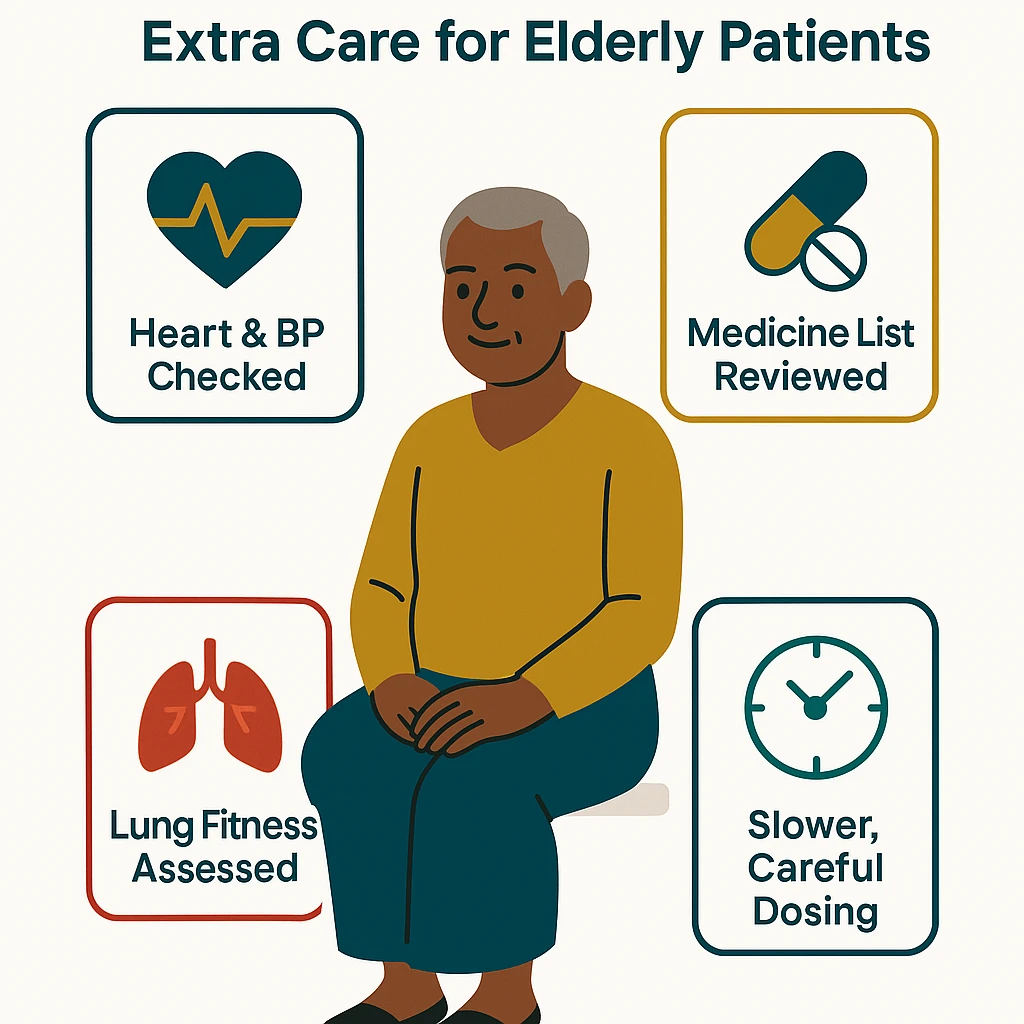
Anaesthesia precautions for elderly patients infographic
Considering Surgery for an Elderly Family Member?
Our anaesthesia team at Sri Ganga Hospital will assess fitness for surgery carefully and explain exactly what extra precautions will be taken.
📅 Book a Consultation 💬 WhatsApp Us